



I tried Teleparty as a way to turn ordinary streaming into a shared evening, and my first impression was that its value depends less on watching a film than on coordinating people. The app is built for friends who want to press play together while staying connected, rather than for someone looking for a new video library. That distinction matters: it can make a familiar show feel social, but it cannot fix an argument over what to watch or replace a proper group call for every kind of conversation.
As a free social app from Teleparty, it has attracted a sizeable audience, with more than five million installs and a 4.0 average from about thirteen thousand ratings. I see that as a sign of a useful idea with some practical rough edges, not as proof that every viewing session will be effortless. The Teen content rating also makes sense for a tool that may be used around films and series intended for older viewers. The current Android version is 2.2.1 and works from Android 8.0 onward, so compatibility should be comfortable on many still-used phones.
How the current Teleparty experience works in real life
A social layer rather than another streaming service
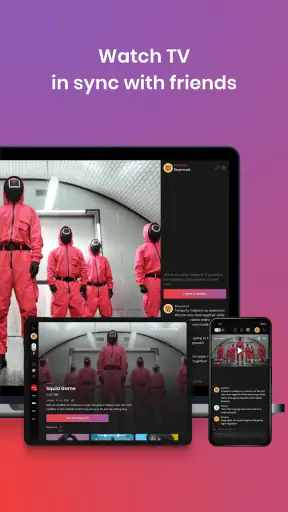
The easiest way to understand Teleparty is to think of it as a shared-room tool. The entertainment still comes from the supported streaming experience, while the app’s purpose is to help people follow the same viewing session. That makes it appealing when friends live in different places, when family members want a regular film night, or when a couple wants a simple ritual without arranging an in-person visit.
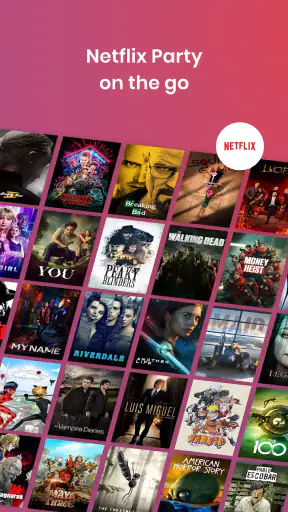
I would not install it expecting a catalog, recommendations, or a replacement for a subscription service. The app’s store summary focuses on watching television and feature films with friends, and that is the right expectation. You still need to decide what everyone can access, make sure the chosen title is available to the group, and agree on a start time. Teleparty helps with the shared moment; it does not remove the planning around that moment.
The best everyday scenario
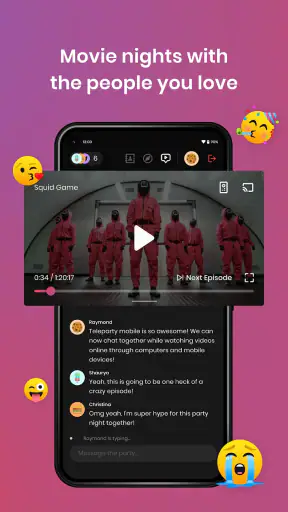
Imagine three friends who usually exchange messages about a series but rarely finish an episode at the same time. One person chooses the episode, another confirms that they can join, and everyone opens the viewing session a few minutes before the agreed start. Once inside, the group can react as the story unfolds instead of sending delayed messages that arrive after a spoiler. That small change is where the app feels most useful.
It is particularly good for low-pressure gatherings. A weekly comedy episode does not require the same preparation as a long film, and a familiar series gives everyone a clearer reason to return. I also found the shared format more natural for people who dislike formal video calls. You can focus on the screen and still have a social connection, rather than spending the whole evening managing a camera view.
What I would prepare before inviting people
The smoothest sessions begin before the app is opened. I would settle the title, episode, and start time in a normal group chat first. I would also ask whether everyone can legally access the same content through their own service. This is an important practical trade-off: a synchronized party is only enjoyable when nobody is left waiting because the selected film is unavailable to them.
For a first session, I recommend choosing something short and forgiving. A familiar comedy or a single episode is better than a three-hour film when nobody knows how the group will respond. It gives you room to learn the joining process, test the conversation flow, and decide whether the app fits your friends. Starting with an ambitious marathon can make small setup issues feel much larger than they really are.
Why the shared timing matters
Watching together changes how people react. A joke lands at the same moment, a surprise creates an immediate burst of messages, and a quiet scene is shared rather than experienced alone. That timing is the central strength of this kind of app. Sending screenshots or texting reactions separately can be fun, but it does not create the same sense of being in one room.
There is also a useful etiquette advantage. When reactions stay close to the viewing session, they are less likely to become a stream of spoilers in a general-purpose chat. I still would not assume that every message is harmless, especially during a mystery or competition show. For spoiler-sensitive groups, agreeing on whether comments should wait until a scene ends is a simple habit that improves the experience more than any technical setting.
How it compares with familiar alternatives
A standard group video call is more flexible for conversation because everyone can see and hear one another directly, but it often makes the video itself secondary. People talk over dialogue, manage microphones, or watch a small shared screen. Teleparty is the better fit when the film or episode should remain the main event.
Watching separately and using a messaging app is easier to arrange, but timing can drift. One person pauses, another misses a line, and reactions become scattered. Teleparty is more purposeful because the group gathers around one viewing session. On the other hand, a normal chat is better for spontaneous recommendations and quick comments when nobody wants to commit to a formal watch party.
In my view, the choice comes down to the kind of evening you want. Pick a video call for a conversation with some background entertainment. Pick ordinary messaging for casual, unplanned reactions. Pick Teleparty when synchronized viewing is the point and everyone is willing to do a little preparation first.
Changes and what the current version tells me
The current release, version 2.2.1, suggests that the product is still being maintained rather than treated as a finished one-off experiment. I see that as encouraging for an app whose usefulness depends on staying compatible with the changing habits of streaming users. Still, a version number alone does not tell me that every device, service, or group setup will behave identically, so I would treat it as evidence of ongoing development rather than a guarantee of flawless sessions.
The app was released on July 11, 2023, which gives it a relatively recent starting point compared with long-established social platforms. That helps explain its focused identity: it is not trying to be a general-purpose network. The developer, Teleparty, has kept the product centered on shared entertainment, and that focus is a strength when you want a dedicated watch-party workflow instead of another crowded social feed.
For existing users, the practical effect of a current release is less about learning a completely different product and more about checking that the app remains comfortable on their phones. If you already use it successfully, I would update normally and avoid changing your familiar routine just because the version label changed. If you are returning after a long break, I would run a short test with one friend before organizing a large group, particularly if the event matters.
Useful habits that are easy to overlook
The most important preparation is agreeing on access before starting. A watch-party app can synchronize people, but it cannot make one subscription or regional catalog appear for everyone. Asking each participant to confirm the title in advance prevents the most frustrating failure: a perfectly organized party where one person cannot join the selected film.
A second useful habit is choosing one person to guide the first session. That person can post the title, start time, and basic spoiler rule in the group chat, then help anyone who is unsure where to begin. This is not glamorous, but it reduces the number of people trying to solve the same setup problem at once. After the first successful evening, the group can rotate that responsibility.
Third, I would separate viewing messages from unrelated conversation. If the group begins discussing work, travel, or old photos in the same stream, reactions to the film become harder to follow. A dedicated party conversation keeps the emotional rhythm of the episode intact. It also makes it easier for someone to mute the discussion temporarily without leaving the event altogether.
For a mystery, thriller, or reality competition, I would use a stricter rule: no predictions that reveal whether they are correct, and no comments until everyone has reached the same point. This is a social workaround rather than a technical feature, but it is one of the biggest differences between a pleasant party and an accidental spoiler session.
Where the experience still has friction
The biggest limitation is that Teleparty adds coordination to something that is normally simple. You need a title, a time, a group, and enough patience for everyone to join. If your friends already struggle to agree on a film, the app may expose that problem rather than solve it. I would skip it for groups that prefer spontaneous viewing with no fixed plan.
There is also a human limitation: not everyone wants to comment while watching. Some people enjoy silence, some prefer to pause frequently, and others want to move ahead privately. A synchronized party works best when participants share roughly the same viewing style. If one friend constantly pauses or falls behind, the group may spend more time negotiating than enjoying the program.
The free price makes trying it easy, but in-app purchases are listed from $3.99 to $69.99 per item. I would therefore check any purchase screen carefully and decide whether the basic experience already meets your needs before paying for extras. The presence of optional purchases does not automatically make the app poor value, but it does mean that “free” should be understood as free to install, not as a promise that every possible option costs nothing.
Another point worth considering is device age. Android 8.0 is the minimum operating system, so owners of older phones should check compatibility before planning a party around them. For supported devices, I would still keep the app updated and close unnecessary background apps before a long session. That is ordinary mobile housekeeping, but it can prevent avoidable interruptions when several people are depending on one shared event.
Who should use it, and who should pass
I would recommend Teleparty to friends who already have a shared interest in series or films and want a repeatable way to watch from separate homes. It is also a sensible choice for long-distance relationships, family groups with a regular evening free, and small communities that want entertainment to anchor a conversation. The app is at its best when the social connection matters as much as the title.
I would be more cautious about recommending it to someone who only watches alone, wants an enormous discovery catalog, or dislikes coordinating schedules. It is also not my first choice for a group whose main goal is face-to-face conversation. In that case, a video call gives people more room to talk, while Teleparty may feel too focused on the screen.
Parents and guardians should also take the Teen rating seriously when deciding whether younger viewers should participate. The app is a social doorway to entertainment chosen by the group, so the suitability of the evening depends on the selected content and the people involved. I would choose the film first, check its suitability separately, and only then invite the group.
What I would watch as the product develops
Because version 2.2.1 is the current release, I would pay attention to whether future updates make joining clearer, reduce the amount of pre-party coordination, and keep the experience dependable as viewing services change. Those are the areas that determine whether a useful idea becomes a regular habit. New decorative options would be less important to me than a reliable start and a calm recovery when someone joins late.
I would also watch how the balance between the free experience and in-app purchases develops. The app is easy to try because it costs nothing to install, but regular users should understand which parts of their preferred routine remain available without spending. Clear expectations matter especially in a group setting, where one person’s purchase decision can affect how the whole party is organized.
My recommendation after using it
Teleparty succeeds when I treat it as a meeting place for a specific viewing plan, not as a universal answer to online entertainment. Its focused social design can turn a distant film night into something that feels shared, and its audience size shows that the idea has broad appeal. At the same time, the app cannot remove subscription differences, scheduling problems, or mismatched viewing habits.
For me, the deciding question is simple: do you have people who genuinely want to watch the same thing at the same time? If yes, the free download is worth trying, beginning with a short episode and a small group. If the answer is no, the app will probably add steps without adding much enjoyment. I would recommend it as a practical companion for planned watch parties, with realistic expectations about coordination, optional spending, and the need for everyone to meet the same viewing conditions.


